
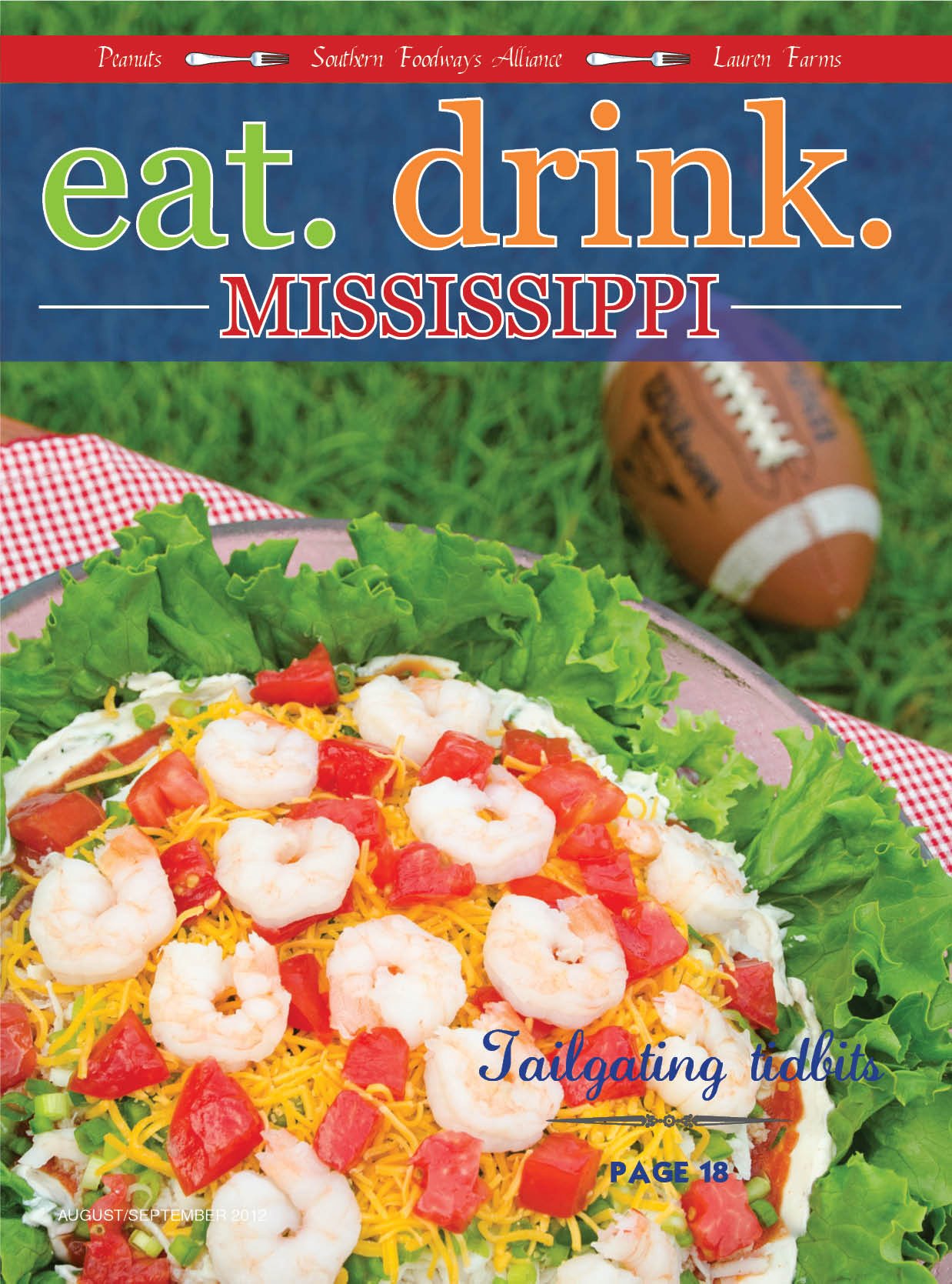
Tailgating: A Sport All its Own

eat.drink.MISSISSIPPI
August / September 2012

In the last few decades, the act of tailgating before a sporting event has become as popular, if not more popular, than attending the actual game.  Mississippi takes its tailgating pretty seriously.  Forget store-bought hot dogs grilled over charcoal in a stadium parking lot.  Tailgating in Mississippi is colorful tents, festive tablescapes, and elegant chandeliers under the shade of majestic trees.  Mississippi’s three largest universities – Mississippi State University in Starkville, The University of Southern Mississippi in Hattiesburg, and The University of Mississippi in Oxford – each have their own unique tailgating traditions.  If you’ve never had the opportunity to attend one of these social gatherings, you are not only in for a surprise, but a real treat in Southern hospitality and food.

 Mississippi State University
Mascot: Bulldog
Colors: Maroon and white
Tailgating spot: The Junction

Mississippi State University’s prime tailgating spot – The Junction – got its name from the Mobile and Ohio rail lines that ran through Starkville back when State was known as Mississippi A&M.  Later, the railroads gave way to congested streets, until 2005 when the university decided to turn the area into a campus gathering spot.  Tent cities begin popping up the evening before a home game and by game day, The Junction is a sea of maroon and white.  Visitors are greeted the bronze statue of Bully – the school’s mascot – and the smell of charcoal fills the air.  Prior to each game, the Maroon Band and Drum Line leads the football team through The Junction in a pre-game procession known as the Dawg Walk.

State graduate Bill Smith of Jackson has been tailgating for 30 years.  What began as six couples has now morphed into 45-50 couples and Smith estimates that around 250 people stop by their tent during the pregame festivities.  In the beginning, the spread was small, but over the years it has become more elaborate to include chandeliers, candelabras, and bartenders.

“Tailgating gives you the opportunity to see all the people you were friends with while you were in school,” Smith says.  “People from all different parts of the state come together to eat and meet with friends.  It is a great gathering spot.”

University of Southern Mississippi
Mascot: Golden eagle
Colors: Black and gold
Tailgating spot: The District

If you are looking for tailgating fun south of Interstate 20, look no further than the University of Southern Mississippi .  Touted by the University as “the biggest football party in South Mississippi,” tailgating festivities kick off the night before every home game with a pep rally at the fountain located in front of Southern’s most recognizable building, the Aubrey K. Lucas Administration Building.  Known as

Friday Night at the Fountain, the pep rally showcases the Pride of Mississippi Marching Band, the Dixie Darlings, the Southern Miss cheerleaders, the school’s mascot Seymour, and the Southern Misses, in addition to coaches and players.

Since the University was founded in 1910, the area in front of the university’s alumni house, referred to as The District, has served as a central gathering place for both alumni and students.  Here Southern Miss fans, donning their signature black and gold attire, can feast on yummy football fare while taking in views of the famous University rose garden.  Prior to the game, a cannon shot signals the start of the Eagle Walk, in which the marching band, the football team, and coaches, make their way from The District to the stadium, known as The Rock.

“Our tailgating has grown considerably over the years,” says Southern Miss graduate and Executive Director of the Southern Miss Alumni Association, Jerry DeFatta.  “Of course, it helps that we have had 18 straight winning seasons.  There is nothing like the smell of smoke from a barbecue and the sound of the band warming up in the background to get people excited to support their team.”

University of Mississippi
Mascot: Black bear
Colors: Navy blue and red
Tailgating spot: The Grove

The University of Mississippi has earned the reputation far and wide of being one of the most unique places to tailgate.  Ole Miss fans pack tent-to-tent in the grassy, shaded ten acres that make up The Grove.  The close proximity turns this tailgating experience into one big party.

“People who have only heard about The Grove but never experienced it are usually expecting a pasture,” says Ole Miss alumnus Jody Varner.  “They are always surprised when they see it firsthand.  It’s much more elegant than that.”

Game day attire is not your usual t-shirts and sneakers.  It’s tradition to tailgate in your Sunday best and Ole Miss is probably the only place where it is perfectly acceptable to tailgate in heels.  It’s not uncommon to see men in khakis, polos, or possibly a few seersucker suits with bow-ties.  As you walk through the rows and rows of tents, you’ll find elaborate set ups with chandeliers, floral centerpieces, and flat screen TV’s.  Some tailgaters even hire their own live bands to play during the festivities.   Food usually consists of sandwiches and finger foods, since grilling is not allowed in The Grove.  However, some fans get around that by setting their grills up curbside.  Periodically, someone will shout, “Are you ready?” and you know the crowd is about to start chanting the “Hotty Toddy” cheer.  A few hours before the game, the fans line up eight-to-ten deep along the Walk of Champions to welcome the Ole Miss football team and coaches.

“Newcomers are usually surprised by how friendly everyone is,” adds Varner.  “Ole Miss is probably one of the few places where opposing teams are treated with as much hospitality as the fans.”


The City with Vision: The Jackson Chamber of Commerce Plans for the Future

Portico Jackson Magazine
Annual Jackson Now issue
July 2012

The city of Jackson not only has soul, it has loyalty, community, and determination.  Over the last few years, while other major metropolitan areas have been struggling to overcome hard times, Jackson has been working to improve its economy and quality of life.  Strategically situated at the crossroad of Interstates 55 & 20 and a stopping point between Chicago and New Orleans and Dallas and Atlanta, the city of Jackson is a prime location for starting a new business.  The staff of the Jackson Chamber of Commerce is working to keep it that way.

The Jackson Chamber of Commerce was launched in 2006 under the umbrella of the Greater Jackson Chamber Partnership.  While the Partnership oversees economic development for seven counties that make up the Jackson Metropolitan area, the Chamber was organized to ensure that the city has the support it needs.  With its sole focus being the city of Jackson, the organization’s mission is to encourage diversity and cultivate a thriving and favorable climate for businesses and communities.

“The focus of the Jackson Chamber of Commerce is strictly on Jackson,” said Cynthia Buchanan, Executive Vice President of Jackson Chamber of Commerce.  “Our board members are individuals that live and work in Jackson and have a strong passion for the city.”

The organization has many exciting projects in the works.  Recently, it teamed up with Market Street Services, Inc., an Atlanta-based national provider of community, workforce, and economic development consulting services, to develop Vision 2022.  Through interviews and focus groups, Market Street conducted an extensive assessment of the economic status of the city of Jackson, evaluating both the strengths and weaknesses of the area.  The group released their findings in Fall 2011.  The Jackson Chamber is now working in conjunction with the Greater Jackson Chamber Partnership to decide how best to implement these changes and promote the city as a great place to live and work and attract new businesses and development.

One of the projects already underway is the construction of the Museum to Market multipurpose biking and walking trail.  The project is being funded by a $1.1 million grant from the Mississippi Department of Transportation in addition to support from The Jackson Bike Advocates, Bike Walk Mississippi, and the Greater Jackson Partnership.  Expected to break ground in 2013, the trail will begin at the Mississippi Farmer’s Market pavilion on High Street in downtown Jackson and follow the abandoned Gulf, Mobile and Ohio Railroad line through the Belhaven community to the Agricultural, Children’s, Nature Science, and Sports museums on Lakeland Drive.  Once complete, it will be the only multipurpose trail in Jackson.  Plans are also in the works to eventually connect the trail to other trails in Ridgeland and Flowood.

“We are finding that people who are searching for a place to live and raise a family are looking for public amenities such as this,” explains Buchanan.  “The Museum to Market trail will not only encourage healthy living and promote a better quality of life for our residents, but it will also attract new residents and more tourists.”

The chamber also works to give back to the community.  Every two years, the organization hosts “Authenticity,” a fundraiser where the proceeds are donated to Jackson first responder groups.  In the last four years, the event has helped raise money for improvements to the Jackson Police Academy and purchase new furniture for the Jackson Fire Department.  Through the Adopt-a-School program, Chamber members serve as both sponsors and mentors for students and teachers at Lee Elementary School.  The organization provides volunteers for school functions such as science fairs and field days, monthly speakers and breakfast for teachers, and volunteers for the school’s Read Across America program.

“We feel by becoming actively involved with our schools, we are producing better students and eventually better citizens,” Buchanan adds.

Where There’s a Will, There’s Croquet

Mississippi Magazine
July/August 2012

Mississippians pride themselves on being avid outdoorsmen, fishermen, even football players.  Likely you know a local golf enthusiast and maybe your next door neighbor runs the occasional marathon.  What you may not know, is that tucked away behind the tall pines and magnolia trees is a little known culture of avid croquet players.

Mention the word croquet at your next social gathering and likely you will conjure up images that run the gamut – everything from childhood memories of playing the game in a suburban backyard, Victorian-era scenes depicted in a favorite movie, to the fairy tale version written about in Alice in Wonderland.  The game itself has been around for centuries, believed to have originated in 17th-century France from a game known as palle-maille.  It was introduced to Ireland and England in the 1850’s before arriving in America sometime in the 1860’s.

Believe it or not, croquet was not always a game for the elegant and well-mannered.  In the 1890’s, Boston clergy lobbied to have the game banned because it brought about a great deal of drinking, gambling, and other behavior considered unbecoming.  The opposition nearly threatened the popularity of croquet in American until it resurfaced in the 1920’s.  By the 1950’s and 60’s, nearly every household was playing a version of the game in backyards across the country.

Traditional American six wicket croquet became solidified within the American culture in 1977 when croquet champion Jack Osborn brought together five clubs to form the United States Croquet Association (USCA).  Their first order of business was to establish a clear-cut set of rules – known as American rules croquet – that are still used today.  The basic concept behind six wicket croquet is simple.  There are two sides – blue and black balls versus the red and yellow balls.

Teams can be played by two single players or in pairs.  The object is to maneuver the balls through a course of six arches, called wickets, and finally into a stake.  The first team to do so wins the game.   While that may seem easy enough, the game combines the physical skills used in billiards and golf with the strategic planning of always thinking one step ahead of your opponent found in a game of chess.  Truly understanding and mastering the game requires practice and study.

Croquet is a game that has always been rich with tradition and the croquet clubs across Mississippi are no exception.  One tradition that has been passed on through the years is the requirement that players wear all white.  There is speculation as to how this rule got started – some say it’s because the sport is usually played in hot weather and the white fabric reflects heat.  Others say it does not distract from the game and looks more elegant.

“It’s tradition,” says Jackson businessman Mike McRee, who was first introduced to the game in 1988 when longtime friend Grady Jolly presented him with a croquet set as a gift.  Jolly had just recently returned from a trip to California, where he played croquet with famous winemaker Robert Mondavi at the Meadowood Club in Napa Valley.  At first McRee was baffled.  He was accustomed to the poorly-constructed sets used for backyard games.  The set given to him by his friend was high quality.

“The set was too nice to play croquet in a pasture,” McRee recalled.  “I decided if we were going to do this, we needed to do it right.”

Tournament croquet is played on a lawn cropped to 1/8 – 1/4-inch high, similar to a golf course.  McRee’s first stop was the local library, where he checked out several books on building a golf green.  Before long, he had bulldozed a plot of land he owned in Pocahontas, MS, and within six months of building the court over 15 couples were showing up to play on a regular basis.

McRee has built several croquet courts since, his most recent in 2005 when he established the Highlands Mallet Club in Flora.  The group of about 15-20 couples meet every Sunday afternoon.   A bracket is created to establish partners and games usually kick off around three o’clock.

Ed and Hillis Becker have been members of Highlands Mallet Club for four years.  They were introduced to the game by Ed’s father Jim, who has been an avid player and a longtime member of the club.

“It is a very enjoyable way to spend a Sunday afternoon,” said Hillis.  “There is usually a different crowd every week.  We have a great mix of people, both male and female, of all ages.”

The season traditionally kicks off in the spring and concludes in October with the annual Member/Guest Tournament.  Members are asked to bring a guest to the weekend-long event, which kicks off with a seated dinner at a member’s house.  Team assignments are made.  Each team is made up of one male and one female player and novices are paired with more seasoned players.  The tournament continues throughout the weekend with teams advancing to the quarter and semifinals.  The winners of the tournament receive the coveted Jim Becker trophy, named in honor of Ed’s father.

The weekend concludes with “high tea,” an elegant spread served right before the championship tournament.  A typical menu includes a variety of finger sandwiches including tomato, cucumber mint, and chicken salad sandwiches; fresh vegetable pate; French almond macaroons; petit fours; scones with lemon curd; chocolate dipped strawberries; and hot and iced tea and champagne.

When asked what advice he would give to someone interested in taking up the sport, Ed Becker suggests starting off by reading as much information available about the game.  “Croquet is one of the few sports where men and women can compete on an equal level, there is no upper hand,” he says.  “It’s a fun game that can be played quickly and really deserves more attention.”

Croquet Clubs in Mississippi:

Highlands Mallet Club
Jackson, MS
(601) 949-3103

Long Beach Yacht Club
Long Beach, MS
(228) 868-8279

Pocahontas Mallet Club
Jackson, MS
(601) 955-3353

Small Town America Meets American Idol: Beatty Street Grocery Doles out Burger, Fries, and a Little Taste of Fame

eat. drink. MISSISSIPPI
June / July 2012
Article and photos

Beatty Street Grocery has been known by long-time Jackson natives as place for burgers and fries.  The unimposing white building on the corner of Beatty and South West Streets has been in the same location since West Street dead-ended at East Rankin Street and the city limits of Jackson only extended as far as Highway 80.  It’s a time most Jacksonians don’t remember.  But where modern burger joints, restaurants, and large commercial franchises move in and then fizzle out, Beatty Street Grocery – like an old friend – has seen the city of Jackson through good times and bad.

Beatty Street Grocery didn’t begin as a restaurant.  When Carolyn Massey’s father bought the establishment in 1940, the surrounding area was lined with family homes and every neighborhood had its own corner grocery store.  Where long wooden dining tables and bar stools now stand used to sit store aisles selling canned goods and produce.  Patrons purchased their meat where diners now place drink orders.  The original deed – handwritten on a piece of tablet paper – hangs prominently in a display case near the back entrance.  Massey’s father paid $250.

“Back then you didn’t have a lawyer draw up the paperwork,” Massey recalls.  “All you needed was a signature and a gentleman’s handshake.”

For a short time, Massey’s mother ran the store while her father continued his job as a bread deliveryman.  However, the stress of running a store and caring for a toddler (Massey was only a year old at the time), proved to be too much.  Massey’s father eventually gave up his delivery job and took over running the store full-time.  In 1947, the store was enlarged to include its modern day location.

The grocery store began selling sandwiches almost immediately.  Several local industries were within walking distance; however many of the employees had nowhere to eat for lunch.  Seeing a need, the store began offering homemade sandwiches wrapped in butcher paper for 10 cents apiece.

Hamburgers wouldn’t make an appearance for another 17 years.  By then Massey was a new bride still helping out at her father’s store.  Not surprisingly, Massey’s mother had grown tired of sandwiches and Massey thought she had just the solution – a brand new electric skillet she and her husband Malcolm had received as a wedding gift.  Massey brought the skillet to work and began frying up hamburger patties when a customer asked if he could buy one.  By 1960, Beatty Street was selling more hamburgers than another up-and-coming restaurant franchise that had just moved into the area – McDonald’s.

The arrival of the first supermarket in Jackson marked the beginning of the end for the local mom-and-pop neighborhood grocery stores.  While many stores began shutting their doors for good, Beatty Street had its restaurant to fall back on.  It still maintains a convenience store, selling sodas, chips, and gigantic jars of dill pickles, but the former grocery store is now known more for their $5 combo meal –which includes an 8 oz. Beatty burger still wrapped in butcher paper, an order of fries, and a 32 oz. drink.  The menu has grown exponentially since they sold their first hamburger to include other popular items such as poboys and salads.  It is currently one of the few places in Jackson where you can still order a fried bologna sandwich.

Over the last 70 years, the neighborhood surrounding Beatty Street Grocery has changed.  The little white brick building has watched as families moved out and businesses moved in.  While many locals who grew up eating Beatty burgers still stop in for lunch, the little mom-and-pop eatery pretty much fell off the radar for much of the younger generation.  That is, until recently.

Earlier this year, Beatty Street Grocery became associated with something quiet unlikely – the popular Fox television show American Idol.  The Massey’s eighteen-year-old granddaughter, Skylar, auditioned for the show in Houston, Texas, during Season 11’s national talent search.  She is the second contestant from Mississippi to appear on the show and the first to make it all the way to the top five.  Suddenly the Massey’s family restaurant has been cast into the limelight as Skylar fans – known as Skoutlaws – have taken an interest in the restaurant where Skylar and older sister Blair both worked after school and mom Mary Harden is the manager.

Beatty Street has taken their new found fame in stride.  There are a few handmade posters of Skylar taped to the walls and the restaurant has seen their share of newcomers.  But other than that, it’s business as usual.  Blue collar workers still bump elbows with men in shirts and ties as they enjoy their sandwiches and fries.  The girls behind the lunch counter still hustle to keep up with the lunch crowd.    Mrs. Massey still sits quietly at the cash register, handing back change and taking the time to talk to a regular.  Occasionally someone will comment about her granddaughter’s success on American Idol.  Massey nods her head and points out that she’s just as proud of her other granddaughter Blair, who is at the top of her class in law school at Ole Miss.

“Every once in a while someone will come in and say, ‘I never knew you were here!’” adds Massey.  “I just have to laugh.  We’ve been right here for over 70 years.”

Beatty Street Grocery
101 Beatty Street
Jackson, MS 39201
(601) 355-0514

Hours:
Monday – Friday 6 a.m.-5:30 p.m.
Saturday 6:30 a.m.-2 p.m.

To Market, To Market

eat. drink. MISSISSIPPI
June / July 2012

The popularity of local farmers’ markets has seen a healthy increase in popularity over the last 15 years, more so since 2008 as more people become conscious of their health and what they are eating. According to the USDA, the number of farmers’ markets across the U.S. increased 17% in 2011, from 6,000 to over 7,000 markets.

There are numerous advantages to buying locally grown produce. First, you are directly supporting the local economy. By purchasing an item from someone who lives in your own community, county, or state – instead of a major grocery chain – they are able to turn around and put that money back right back into the economy.

Second is freshness. Commercially grown produce is often picked before it’s ripe, usually several days before it ends up on store shelves, and then refrigerated so the produce is able to withstand the arduous travel to its final destination. You have no idea how long ago your shiny red tomato was picked and because it was not allowed to ripen on the vine, it often does not develop its full flavor. Local produce is often picked within the last 24 hours. The fresher is it, the better it tastes.

Third is nutrition. Time, temperature changes, exposure to air and artificial light can all rob fruits and vegetables of their nutrients. Similarly, produce that has been picked early does not have as many nutrients as ripe produce. In order to survive the shipping process, some commercial farmers will even treat their fruits and vegetables with preservatives and chemicals to prevent bacterial growth. However, when a harvest’s final destination is just a short distance away, local farmers have the advantage of picking at just the right time and don’t have to take extra measures to ensure their crop can survive traveling across the country.

Finally, there is cost. Buying a pint of strawberries when they are in season is cheaper than buying them in the winter. While larger chain grocery stores may have the advantage of a lower price, farm stand produce typically lasts longer because it was picked recently, leading to less waste.

Mississippi has nearly 60 farmers’ markets registered with the Mississippi Department of Agriculture & Commerce (MDAC), many of which are certified. The Mississippi Certified Farmers Market program is a voluntary distinction awarded to a market used by two or more Mississippi growers on a frequent basis for the direct sale of their own produce or food products to consumers. The certification also requires at least 50% of the agricultural products offered for sale are grown within the state. Whether you are health conscious or looking to save money, there is sure to be a farmers’ market in your area.

Hernando Farmers Market
A city of 15,000 people, Hernando is a small community that maintains its 1800’s charm while still just a short distance away from the Memphis-metro area. The city already has a well-established foodie community and in 2008, area development officials decided to launch a farmers’ market to encourage its citizens to buy local and attract more young professionals to the community.

“On any given Saturday and even all week during the growing season, you’ll find roadside markets sprinkled on street corners or in parking lots throughout the county,” said Leigh Wills, manager of the Hernando Farmers’ Market. “Truly, the folks in DeSoto County love their markets, their farm fresh produce, and their homemade artisan products.”

The market began with three vendors who set up tables under the big oaks that shade the town square. By the end of the growing season, the market had grown to 15 vendors. Four years later, the market boasts between 65-70 full-time to seasonal vendors selling everything from fresh milk in glass bottles, local honey, fruits and vegetables, baked goods, and fresh flowers. The popularity and growth of the market has not gone without notice. For two years in a row, it has been named Mississippi’s Favorite Farmers Market by the American Farmland Trust and ranked 7th nationally among markets with more than 56 vendors. It has also been featured in Mississippi Magazine as one of six favorite markets statewide.

“This has turned into more than a farmers’ market, it has become an experience,” says Shelly Johnston, director of community development for the City of Hernando. “People will come out, walk their dogs, buy their produce, and sit and talk. The market has really brought the community together like nothing else.”

Hernando Farmers’ Market
2535 Highway 51 South (historic Hernando Court Square)
Hernando, MS
Open every Saturday, May-October, 8:00 a.m. until 1:00 p.m.

Indianola Open Air Market
Located in the heart of the Mississippi Delta, Indianola is known for blues and B.B. King. However, like most communities in the Delta, Indianola also has large agricultural roots. Approximately six years ago, members of the Bill Richardson Civic Alliance Group and Indianola Main Street decided to join forces and establish a community farmers’ market.

Set against the backdrop of the B.B. King Museum and Delta Interpretive Center, the market has grown from four vendors to nearly 16 during peak growing season. Consumers can not only experience the rich culture that is the Mississippi Delta, but also enjoy live music while shopping for handmade crafts, garden plants, baked goods and, of course, home grown produce. Food and drinks are also available for purchase.

Maggie Barnes, an Indianola resident, helped found the market. “We really try to make sure the market stays community-oriented. We always take into account the different ethnics group in the area and make sure we have something for everyone. The market has become a gathering place for the community.”

Indianola Open Air Market
200 Second Street – B.B. King Museum
Indianola, MS
Open every Thursday, May – July as produce allows, 4-7 p.m.

Neshoba County Farmers Market
There is no question that Neshoba County and the surrounding areas are an agricultural community. Neshoba County is home to one of the state’s largest county fairs, whose humble roots began as a two-day meeting for local farmers. Nearly three decades ago, the local chapter of the Mississippi Farm Bureau Federation established the Neshoba County Farmers Market as a way to bring together small farmers and consumers looking to purchase fresh produce. Today, the market is currently the only market in Mississippi sponsored by a local Farm Bureau chapter.

The market boasts around 10 vendors selling everything from fresh squash, potatoes, onions, beans, cabbage, okra, tomatoes peas and cucumbers. All items are harvested from Neshoba County and the surrounding area. This year, the market plans to enhance the Saturday market by offering baked goods.

Harvin Hudson, county director of the Neshoba County Cooperative Extension Service, hopes to continue growing the market’s popularity. “We are always looking for new producers and welcome them to be a part of our market.”

Neshoba County Farmers Market
Highway 16 East – Behind Farm Bureau Office
Philadelphia, MS
Open every Tuesday, Thursday, and Saturday; June – September; 6 a.m. – 9 a.m.

The Mississippi Farmers’ Market
The Mississippi Farmers’ Market has the distinction of being one of the oldest and largest markets in the state. The market can trace its roots back to the early 1950’s. In 2005, it relocated to an 18,000 square-foot facility in downtown Jackson near the fairgrounds. During peak growing season, customers have more than 60 vendors to choose from.

The market really stresses being a “grower’s market,” meaning that vendors have to produce what they sell. Farmers are required to undergo an annual inspection to ensure that their goods are actually being grown on their farm. Even arts and crafts vendors must source much of the raw materials used in producing their goods from within the state.

“Our customers have been really supportive of our movement,” says Will Scarborough, manager of the Mississippi Farmers’ Market. “Many of our vendors are specialty farmers, meaning they specialize in growing specific produce. We get a lot of visitors from out-of-town, but locals are the people who benefit the most.”

In addition to fresh produce, craftsmen and artisans, the market also offers cooking demonstrations from culinary schools and chefs from area restaurants, live entertainment, senior citizen and children activities, and seasonal events and promotions. Visitors can also grab a bite to eat at the Farmers Market Grille, a permanent eatery that serves breakfast and lunch.

The Mississippi Farmers’ Market
929 High Street
Jackson, MS
Open every Saturday; last weekend in January until a week before Christmas; 8 a.m. – 2 p.m.
Open Tuesday, Thursday; mid-May to August; 8 a.m. – 2 p.m.

Ocean Springs Fresh Market
Just a few miles away from the glitz and glamour of Biloxi, Ocean Springs has the appeal of a quiet beachfront community. The warmer climates found along the Mississippi Gulf Coast afford farmers in the area almost a year-round growing season. The Ocean Springs Fresh Market began in 2004. After closing down briefly in 2005 because of Hurricane Katrina, the market reopened a year later. During peak growing season, the market has around 25 vendors selling everything from fresh fruits and vegetables, freshly baked artisanal breads, fresh pasta, eggs, and fresh flowers.

The Ocean Springs Fresh Market also prides itself on being a producer only market. Diane Claughton, founder of the market, personally visits each vendor to verify that they produce what they sell.

“Many people think that all markets calling themselves ‘farmers markets’ have farmers,” Claughton said. “Unfortunately, a great number of these are in reality ‘resellers markets’ in which most or all of the produce is purchased from a wholesaler and trucked in from hundreds or thousands of miles away. Ocean Springs Fresh Market is a producer only market, meaning that all of the vendors either grow or produce their products in the Gulf Coast region and the producer or an employee is at the market to answer any questions.”

Claughton explains that many of her farmers either pick their produce late the day before market, or early the day of. She recommends visitors get to the market early when the best selection is available and to bring cash. Claughton encourages consumers to talk to the vendors and ask questions about how their produce was grown and what tips they have for keeping their produce fresh.

“Mississippi is a state with a long, rich history in agriculture,” Claughton adds. “Many of our customers shop in our market in part because they want to help Mississippi grow more farmers.”

Ocean Springs Farmers Market
1000 Washington Avenue
Ocean Springs, MS
Open every Saturday, 9 a.m. – 1 p.m., Year round

If You Build It, They Will Come: Livingston Farmer’s Market

Mississippi Magazine
May / June 2012

Once upon a time, before central air conditioning and television sets brought us in from our front porches, people took the time to get to know their neighbors.  There were no early morning meetings to rush off to, no cell phones to distract us, and no rush hour traffic to put us behind schedule.  Good fences did not make good neighbors, but rather good neighbors made good friends.

Five years ago, developer David Landrum set out to bring back those good old days.  His inspiration came from a long-forgotten Mississippi town that last saw its heyday when the horse and buggy were a preferred mode of transportation.  The town of Livingston was established as Madison County’s first town and served as the original county seat from 1828-1833.  Located at the crossroads of Highway 463 and 22, Livingston was once considered a thriving center of business that would meet its demise some thirty years later after being bypassed by the Mississippi Central Railroad.

The first time Landrum visited the site, the only evidence left to suggest that Livingston had even existed were a few overgrown roadbeds.  It was enough to convince him that the site had potential.  Six months later Landrum and several investors purchased the land and set out to restore the town to its former glory.

The goal – create a community that not only highlights Mississippi’s historic roots, but also celebrates the best of what Mississippi has to offer through food, music, literature and art.  That vision includes focusing on the farm-to-table movement, which seeks to take locally produced food and deliver it straight to consumers.   As momentum began to build, Landrum, his wife Jill, and Creative Director Leisha Pickering felt they needed to create something that would tie the entire community together.  Thus, the idea of the Livingston Farmers Market was born.

“We want our town to have an organic, earthy feeling that is supportive of local farmers, artists, and craftsman while celebrating our state’s natural resources,” Pickering said.  “We felt like establishing our own farmer’s market would encourage people to come out and be a part of our town and help lay the groundwork for what we are trying to accomplish.”

The group brought in Richard Butler, former director of the Mississippi Farmer’s Market, to head up the operation as Farmer’s Market Project Manager.  Butler worked with the Mississippi Department of Agriculture and Commerce every step of the way to ensure the market met every guideline needed to become a certified farmer’s market.  On June 2 of last year, the market opened with 18 vendors.

“Honestly, that first market we were all nervous,” said Landrum.  “The closer it got to four o’clock when we were supposed to open the more we wondered if anyone would show up.”

Jill Landrum adds, “When we first told people about our plans, their first reaction was usually, ‘You are going to build a town where?’  We wondered if we built this, would people really come?”

The Landrum’s fears were unfounded because in the end, people did come.  They came not only to purchase fresh produce and handmade crafts from farmers and artisans all across the state, but to get away from the hustle and bustle of daily life and spend a moment relaxing and reconnecting with their community.  By the time the market closed in the fall, the market was realizing almost 1,000 visitors a week and the number of vendors grew to nearly 30.

“We thought once the summer months started getting hotter that people would probably come, get their groceries, and leave,” David Landrum admits.  “But we noticed that people would stay and hang out.”

Jill Landrum agrees, “People came back week after week.  I think they really longed for that connection and sense of community.  They would sit, visit, and listen to music. The atmosphere was really special.”

So what can a first time visitor expect when they make a trip to the Livingston Farmer’s Market?  Right off the bat, they are met by rows and rows of tents shaded by a canopy of trees on the site of the old Livingston town square.  Guests have their pick of fresh, seasonal produce – much of it grown in Mississippi – including tomatoes, onions, garlic, herbs, watermelons, and berries.  They can also pick up something special – such as a jar of homemade jam, goat’s milk soap, a loaf of homemade bread, and other handmade gifts.  Before heading home with a bag full of goodies, they can enjoy a cup of freshly squeezed lemonade or a glass of wine from the wine bar and take a moment to enjoy some live music.  The market also has children’s activities to ensure even the youngest visitor has a good time.

“People who make the trip for the first time come away with something that goes way beyond a traditional farmer’s market,” Butler said.  “Everything is carefully planned and executed so that you leave with a totally different experience.”

This year’s farmer’s market kicks off on May 17 and will continue every Thursday from 4-8 p.m. through October.  The number of participating vendors is expected grow another fifty percent and include farmers from as far away as Greenwood and Simpson and Smith counties.   Several area restaurants will be returning this year to give cooking demonstrations on how to prepare locally grown food.

Just as the Town of Livingston will soon begin to grow and evolve, plans are in the works to keep the farmer’s market new and exciting.  Livingston’s first building – a permanent pavilion to house the market – is expected to be completed later in the year.  Viking Range has plans to construct an outdoor kitchen for cooking demonstrations.  In keeping with the organic, farm-to-table focus, a working farm will produce fresh eggs, cut flowers, and vegetables in addition to a greenhouse for varieties not found locally.

“Our goal is to build one of the best farmer’s markets in the country,” David Landrum reveals.  “Not only are we supporting local farmers, but encouraging growth in the local economy.”

Taking the Cake: Fat Cake Guy

eat. drink. Mississippi
March / April 2012

When Jim Stewart got out of bed one Saturday morning in June 2007, he had no idea that by the end of the weekend he would be the new owner of a candy store.  Stewart and his wife Ginnia decided to run errands that afternoon, ending up near Candy’s Confections on Old Fannin Rd. in Brandon.  Noticing the door to the store was left propped open, the couple decided to step inside.  Next thing they knew, the current owner was making them an offer.

“My wife and I decided to go home that night and talk about,” revealed Stewart, who at the time was working as a safety manager for a trucking company in Clinton, but had spent several years working in the food industry.  “The next day we went back and did an inventory and Monday morning I quit my job.”

Because the name Candy’s Confections was already well-known within the community, the couple decided to keep the name.  Baking was a service that the previous owners offered, but gourmet candy and sweets had always been the main focus of the business.  Eventually, Stewart began to notice more demand for custom-made cakes.  In September 2011, the Stewarts decided to close the original location and move into a larger facility on Lakeland Drive in Flowood.  The store re-opened as Fat Cake Guy a week later.

Fat Cake Guy offers a variety of custom designed-cakes for any occasion including weddings, birthdays, baby showers and corporate events.  Their cakes range from decorated sheet cakes to 3-D cakes (to date, his most elaborate 3-D cake has been a replica of the Starship Enterprise from Star Trek) and come in any flavor imaginable from traditional white to red velvet to hummingbird.

“Now days with Google, if I can find a recipe for it, I’ll make it,” says Stewart.

Fat Cake guy is more than just a bakery, however.  Not forgetting their roots, the store still offers a large selection of bulk candy items in addition to gourmet chocolates, brownies, cupcakes, and iced cookies.  Both adults and children can pull up a bright orange bar stool and enjoy a “candy cocktail” at the Candy Bar.  These non-alchoholic beverages, comprised of soda and flavored Italian syrup, are served in brightly colored hurricane glasses with candy fruit garnishment and fun, squiggly straw.  Patrons can try a frappe freeze, which is a non-caffeinated drink made of crushed ice, milk, and chocolate or caramel syrup.

Parents looking for a fun and creative idea for their child’s birthday need to look no further.  Not only can Fat Cake Guy bake the cake, but they can host the party as well.  Each guest is given a four-inch, iced cake that they can decorate any way they want with icing, candy or sprinkles.

Looking back over the unexpected turn of events that brought him from a safety expert to cake baker and decorator extraordinaire, Stewart adds, “Almost five years later, we are still going strong.  It has been a lot of fun and I hope to keep it up.”

Fat Cake Guy
5352 Lakeland Drive #2000
Flowood, MS 39232
601-992-9623
Website

Hours:
Monday – Thursday 7am – 7pm
Friday – Saturday 7am – 8pm
Sunday – Closed

Are you Ready to Rumble? Eat Jackson’s Bread Pudding Throwdown Serves up a Delicious Dose of Competition

eat. drink. Mississippi
March / April 2012
Article and photos

Sparkling lights strung across the balcony of Old Capitol Inn’s Gala Ballroom cast a warm glow over some of Jackson’s top chefs and over 350 dessert lovers from the Jackson-metro area for the city’s first ever Eat Jackson Bread Budding Throwdown on January 20.

Large silver chafing dishes lined long rows of tables in the center of the room and as guests hurriedly tied on their bread pudding official judge aprons and grabbed a plate, the lids came off to reveal the warm, sweet, gooey contents hidden underneath.

Fifteen restaurants participated in the event, showcasing sixteen different varieties of bread pudding ranging from classic to creative.  Each judge was given an official ballot.  The name of the game – visit each station, try the bread pudding, then cast your vote for Best Overall, Most Creative, Most Like Grandma’s, and Best Table Decoration.

Parlor Market went home with two awards – Best Table Decoration and Most Creative.  Their “Lighter than Air Bread Pudding,” was served on individual spoons to ensure each guest got a perfect bite of brioche, dried cherry anglaise and candied pecans.  Chef Tom Ramsey of Underground 119 was named runner up.  His “Homer” Bread Pudding was inspired by the favorite food of cartoon character Home Simpson and featured grape jelly donuts, beer, and bacon.

Primos Café was awarded Most Like Grandma’s.  Their simple, yet comforting recipe has been evoking fond memories of Grandma for years.  Runner up was another Jackson-area landmark – Two Sister’s Kitchen.

This slideshow requires JavaScript.

The big winner of the night was the White Chocolate and Cranberry Bread Pudding by Chef Andy Cook at Parker House.  The recipe was first developed by Ken Dixon, former general manager, and Kenny Sutton, former pastry chef, for the restaurant.  Chef Cook tweaked the recipe after joining Parker House in 2005, but says it’s basically the same creation.

“Over the years we have been hearing people tell us our bread pudding the best in town, but this is a town filled with a lot of incredible bread puddings,” said Chef Cook.  “When Eat Jackson mentioned the bread pudding throw down I was very excited about our chances.  We had a blast participating and anytime you get so many restaurants together for an event like this it’s like a family reunion.”

In between judging, guests enjoyed a top-shelf bourbon tasting by Katz Winery in addition to gourmet coffee courtesy of Beanfruit Coffee.

A portion of every ticket purchase went to the Craig Noone “Rock it Out” Memorial Scholarship, a fund established by the Mississippi Restaurant Association Educational Foundation (MRAEF) in honor of the late owner and head chef of Parlor Market.  The scholarship is awarded to a Mississippi culinary student to help with the cost of school.  Attendees were also able to make additional donations during the event.

Added Cook, “Even though it was a competition, it was a great time win or lose.  We were participating for a great cause and for the joy of interacting with people and bringing them joy through our passion for feeding people.”

Eighties Nightmare to Kitchen Fabulous

Portico Jackson Magazine
April 2012

It has been said that the kitchen is the heart of the home.  For Andy and Anna Howell, they had what they felt like was a great house in a great neighborhood.  Their Madison home is located in a friendly subdivision with a spacious backyard for the couple’s son and dog.  However, despite these great features, the couple felt like the “heart” of their home needed something more.

Built in the 1980’s, the Howell’s describe their home’s living space as “dated, small, dark, and totally isolated.”  The layout was awkward, they had a dining area they seldom utilized, and storage and workspace was minimal.

“The kitchen just did not work well at all,” Anna recalled. “The appliances all opened on top of each other – the dishwasher door opened right in front of my sink!  I would also have to include the burgundy countertops and pink and burgundy floral wallpaper to the list of items I did not like about the house.”

The Howell’s seriously considered packing up and moving out of their beloved neighborhood into a larger home, but before putting their house on the market they decided to look into remodeling.  Previously, the Howell’s worked with Celia Barrett Designs to renovate their master bedroom.  Once again, they called on Barrett to help with the redesign of their kitchen and the surrounding living space.

“Starting with a design concept helps me stay focused as I travel through the planning, design, and decoration of a space,” Barrett said.  “My concept for the Howell’s home was as you walk from living room to dining room you are transported into a welcoming, open home with comfort and character.  I wanted to be able to have an abundance of light, use the space to its maximum capacity, and turn it into a room they never wanted to leave.”

Barrett presented the family with a plan that not only provided more functionality, but added more square footage to the existing home.  By knocking out the adjoining wall between the kitchen and the dining room, the newly designed area added an open family room with a fireplace, cathedral ceilings, and full-height windows to let in more light.  A peninsula island in the kitchen looked out over the family room and provided much needed storage and counter space.

The renovation not only enlarged the original kitchen, but also extended the bathroom and added a walk-in closet to the master bedroom in addition to a laundry room off the kitchen.  Neutral color scheme, granite countertops, and custom-stained wood cabinets add a casual and comfortable element to the space.  New wood flooring replaced the carpet in the dining and great room, while large travertine tiles were laid in the kitchen.  Extra touches such as a pot-filler over the gas range, side bar sink, stone and cracked tile backsplash and unique hand-painted tiles around the fireplace were added surprises that the family loved.

Barrett also knew of Anna’s fondness for family heirlooms and antiques, so she incorporated several of Anna’s pieces plus a few finds of her own to make the space truly feel like home.  The entire design was rounded out with a full-length deck across the back of the house and a screened in porch, giving the family the perfect place to relax on a warm evening.

“With busy work and school schedules, family time is so limited these days,” said Anna of her new living space.  “Celia really delivered when we told her we wanted and open living area.  She gave us our ‘wall of windows,’ which really brings the outside in.  I now have a front row seat to so many beautiful sunsets.”

Out of Africa: From Law Books to High Fashion

Mississippi Magazine
March/April 2012

Most people on the outside looking in to Ashley Pittman’s life six years ago would have assumed she had it all.  The daughter of Mississippi natives, Pittman graduated from Texas Christian University with degrees in political science and business.  She quickly landed a job working for a private equity firm in New York City, later moving to Los Angeles.  Young and successful, it would appear she had life on a string.

However, Pittman will be the first to tell you that while her job was interesting, it left her feeling unfulfilled.  She later left the finance world to pursue a deeper calling – traveling to Africa.  In 2006, she became a volunteer for the Clinton Foundation, a non-profit organization established by President Bill Clinton to improve the health and strengthen the economies of countries across the globe.  Later that year, she boarded a plane for Rwanda as part of the organization’s HIV/AIDS initiative.

While in Africa, Pittman discovered locally-produced jewelry and the seed for Ashley Pittman Jewelry was planted.  Once her time in Rwanda came to an end, she returned to the states to attend law school.  However, Pittman frequently found herself reflecting on her time in East Africa.

“I knew I wanted to go back and work in East Africa, but I wanted to do something more hands on,” she reveals.

Upon graduating from Boston’s Northeastern University in 2009, she decided to use her finance and law background to develop a sustainable business model that would allow her to provide not only employment for an area ravaged by drought, but also training for local artisans.  Suddenly, Pittman found herself going from studying law textbooks to high fashion.

“I never thought this is what I would be doing,” she laughs.  “However, the people I met already possessed the skills needed to create the jewelry, they just lacked knowledge of what was in fashion and quality control.  They also lacked the infrastructure needed to sell the items they produced.”

Pittman’s company purchased a collection of jewelry crafted by a group of Kenyan artisans.  Two weeks after showing the first set of samples, the line was picked up by New York-based luxury department store Bergdorf-Goodman.

“It was crazy,” Pittman says, “and incredibly lucky.”

Today, Pittman’s company purchases goods from a woman’s cooperative that employs approximately 80 artisans.  It has expanded its line into nationally recognized retailer Neiman Marcus and the independent Dallas-based specialty emporium Stanley Korshak.  Her collection features bracelets, necklaces, and earrings made from bronze, semi-precious stones, and horn sourced from locally raised livestock.  She makes frequent visits to Africa, returning every three months for 3-4 weeks at a time to spend time with the artisans and introduce new designs.

Pittman’s success has not only allowed her to follow her passion, but it has also given her the opportunity to help improve the lives of the artisans she works with.  Through the Ashley Pittman Foundation, 10% of the profit from each jewelry sale supports projects that improve the Kenyan community of Kamboo.  To date, the foundation has been able to help support a rural health center that serves over 4,000 people who have never had access to basic healthcare.  Equipped with clean, running water, eight patient rooms, and a refrigerator for medicine storage, it is estimated that the clinic treats over 100 malaria patients every month.  The Foundation also supplies the local primary school with clean water and hot meals, an amenity that is not otherwise readily available to many of the children who attend the school.

“Many of these artisans did not know where their next form of income would come from,” Pittman adds.  “I believe in ‘Trade, not Aid.’  Rather than these people relying on donations, they now have the ability to work for themselves and create a better life.”

To read more about Ashley’s story and her Foundation:
Ashley Pittman Jewelry